-
Home
- NEW
- CZ Jewelry Collection
- Pearl Jewelry
- Minimalist Jewelry
- Natural Stone Jewelry
- Resin & Acrylic Jewelry
- Earrings
- Ring
- Necklace
How to Start a Private Label Waterproof Jewelry Brand: A B2B Sourcing Guide
Oct 23, 2026The modern jewelry consumer increasingly prioritizes everyday wearability, durability, and comfort. Instead of reserving pieces for special occasions, buyers are looking for jewelry that can seamlessly transition from the office to the gym or the shower without losing its finish or causing skin irritation. For emerging direct-to-consumer (DTC) brands, established e-commerce sellers, and independent boutique owners, building a private label line around these consumer priorities presents a highly viable business opportunity.
However, navigating the overseas jewelry supply chain can be daunting. The gap between a successful brand and a struggling one often comes down to backend decisions: properly allocating startup capital, accurately calculating landed costs, choosing the right sourcing model, and maintaining strict quality control across multiple production runs.
This comprehensive B2B sourcing guide breaks down the process of launching and scaling a private label jewelry brand. It is designed to equip wholesale buyers with the practical knowledge needed to evaluate suppliers, manage budgets, and build a resilient product line.
1. Choose Your Jewelry Niche and Product Positioning
A successful private label brand starts with clear, defensible product positioning. The jewelry market is highly saturated, so establishing a distinct niche is crucial. Targeting the "everyday wear" and "sensitive skin" demographics requires a commitment to materials that actually align with these promises.
Stainless steel, particularly the 316L grade, is a common and highly preferred choice due to its enhanced durability and corrosion resistance.
However, as a brand owner, you must use marketing terms like "waterproof," "tarnish-free," and "hypoallergenic" responsibly. These are powerful selling points, but they are not absolute guarantees. The actual performance of a piece of jewelry depends heavily on multiple technical factors:
- •The specific grade of the base metal.
- •The thickness and methodology of the plating (such as vacuum PVD).
- •The end-user's actual wearing environment.
When developing your product line, ensure your consumer-facing marketing claims align strictly with the technical specifications you request from your manufacturing partner.
2. Choose Between Ready-Made, ODM, and OEM Jewelry
Selecting the right sourcing and manufacturing model dictates your time-to-market, initial capital requirements, and product exclusivity. Wholesale buyers typically navigate three main pathways:
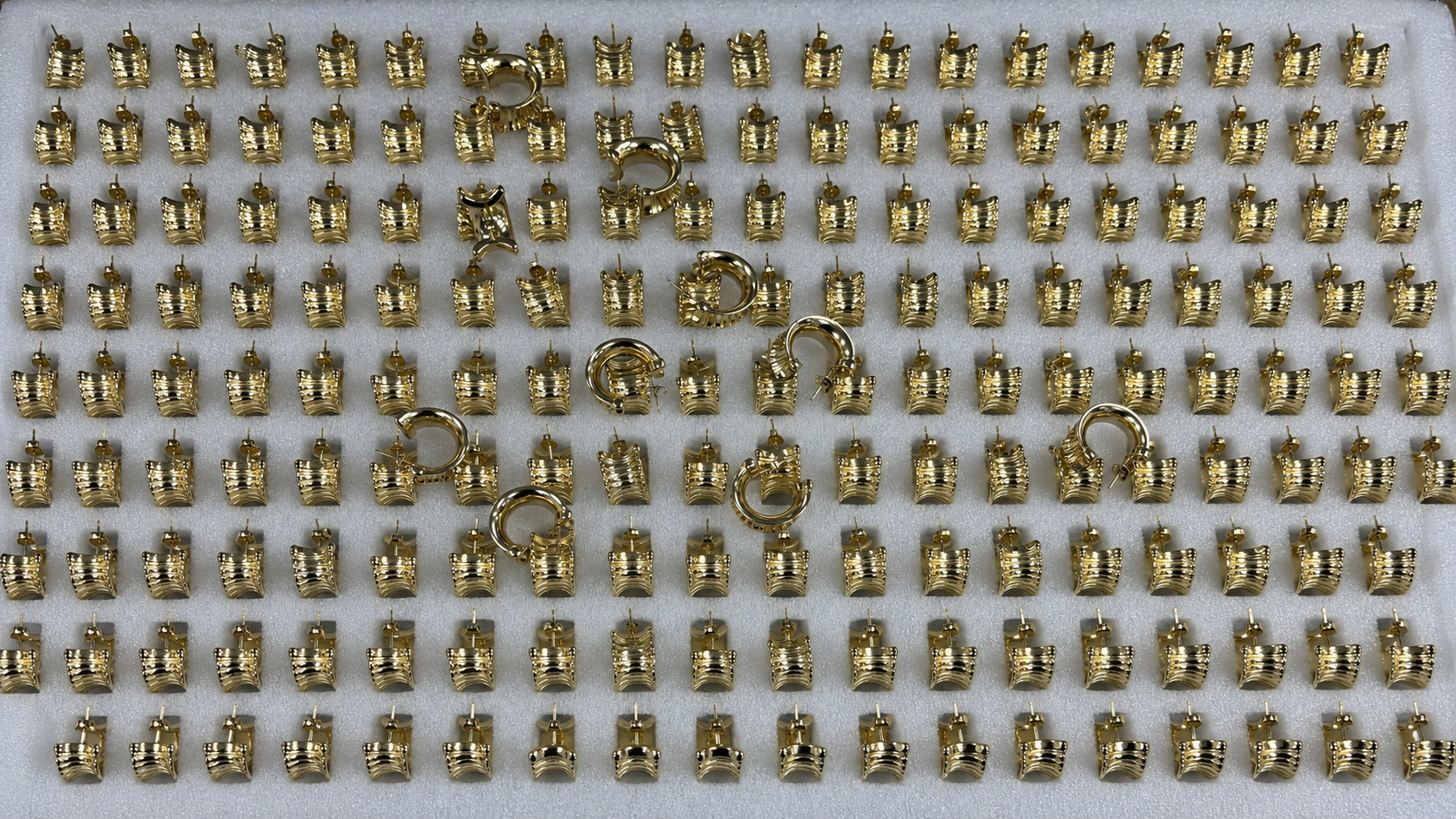
- •Ready-Made (White Label Sourcing): Selecting fully developed designs from a manufacturer’s catalog. This is the fastest route to market for startups looking to test product-market fit with minimal upfront design costs and lower Minimum Order Quantities (MOQs).
- •ODM (Original Design Manufacturing): This can involve modifying a manufacturer’s existing designs (e.g., swapping a stone color or chain style) or selecting from proprietary designs the manufacturer has developed for client use. It bridges the gap between speed to market and product differentiation.
- •OEM (Original Equipment Manufacturing): Complete custom production. You provide the vision (sketches, samples, or CAD files), and the factory engineers the product. It can support exclusive designs, subject to agreed intellectual property and manufacturing terms.
For a detailed breakdown of these collaborative models and production steps, read our OEM & ODM Stainless Steel Jewelry Manufacturing Guide.
3. Plan Your Startup Budget, MOQ, and Pricing
Evaluating wholesale quotes requires looking far beyond the bottom-line unit price.
Understanding Price Discrepancies
When sourcing, you may receive vastly different quotes for seemingly identical items. It is crucial to understand that price differences can stem from a variety of factors, including the grade of materials (e.g., 304 vs. 316L), the plating techniques (water plating vs. PVD), polishing methods, or simply the economies of scale from larger order quantities. You cannot judge quality solely by price; you must compare the exact technical specifications provided by the suppliers.
Strategic Budget Allocation
Before calculating unit economics, decide how to allocate your initial inventory budget:
- •Concentrated Inventory Strategy: Ordering 500 pieces of 2 styles. If the market rejects the design, your capital is trapped in slow-moving inventory.
- •Diversified Inventory Strategy: Ordering 50 pieces of 20 different styles. While this diversifies your product risk and allows you to test what sells best, keep in mind that managing 20 different SKUs will increase your administrative and inventory management costs.
A Practical Budget and Pricing Calculation Example
Note: The following numbers are strictly hypothetical examples for educational purposes.
Let's assume you are sourcing 300 pieces of a necklace:
- •Hypothetical Unit Cost: $3.00 per piece (300 x $3.00 = $900.00)
- •Custom Packaging Cost: $0.50 per unit (300 x $0.50 = $150.00)
- •International Express Shipping: $120.00
- •Hypothetical Import Duties (Estimated 5%): 5% × $900 product value = $45.00 (Note: Import duties and custom fees vary significantly depending on the destination country, product classification, and applicable trade rules. The 5% rate here is strictly a placeholder).
- •Total Landed Cost for 300 pieces: $1,215.00
- •Landed Cost Per Unit: $4.05
If you set your Manufacturer's Suggested Retail Price (MSRP) at $35.00:
- •Gross Profit Per Unit: $35.00 - $4.05 = $30.95
- •Illustrative Gross Margin: 88.4%
Remember, gross margin is not net profit. You must deduct payment gateway fees, marketing (CAC), and operational costs.
4. Build Your Brand with Custom Jewelry and Packaging
Branding transforms a generic commodity into a high-perceived-value retail item.
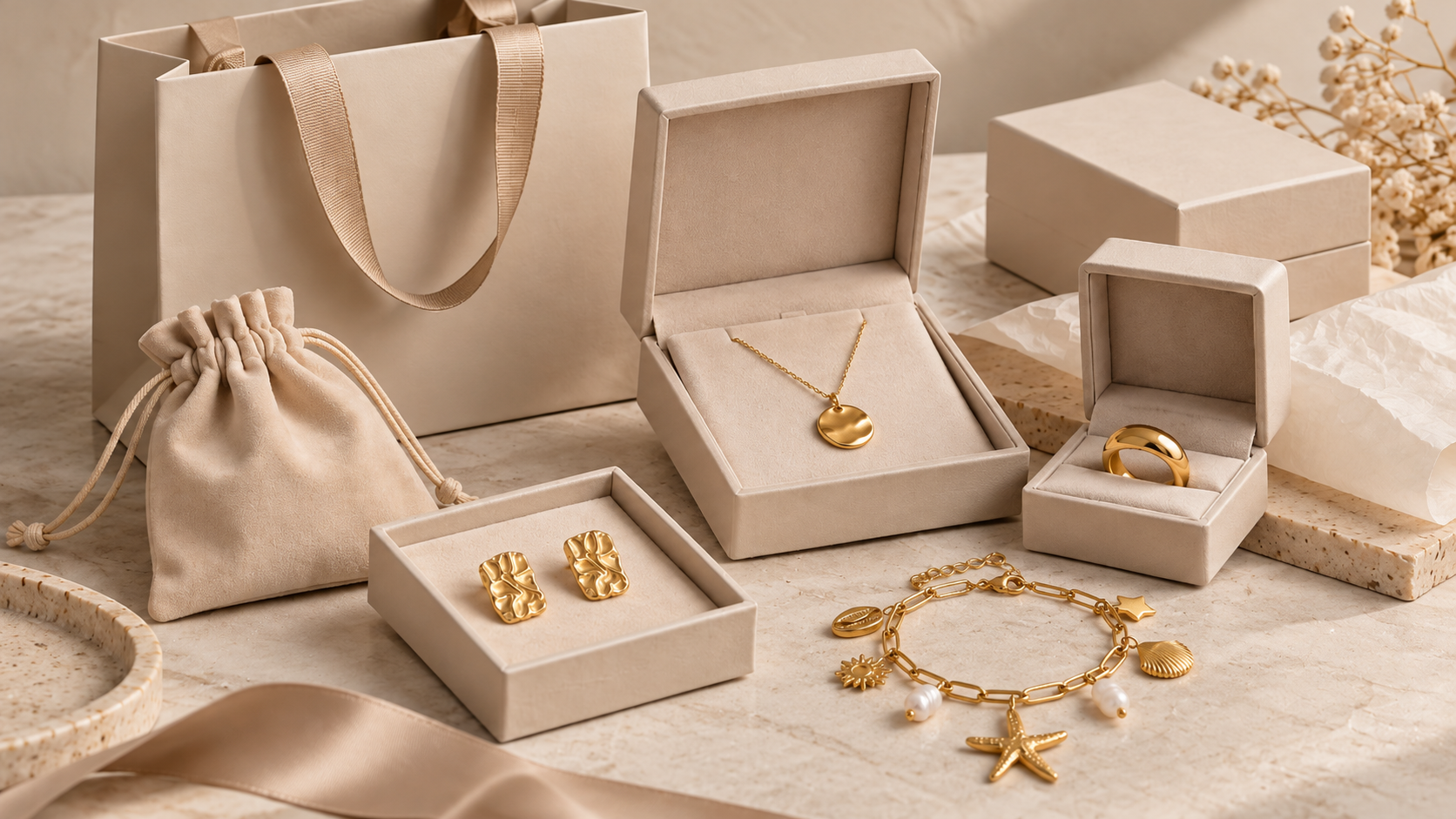
- •Custom Logos: Utilizing laser engraving on the jewelry provides a durable branding option. Specify the exact placement, font size, and engraving depth during the sampling phase.
- •Retail-Ready Packaging: Custom-designed boxes, pouches, and care cards elevate the unboxing experience.
5. Manage Quality Control, Compliance, and Reorders
Securing a high-quality initial batch is only the first step. Supply chain consistency is the backbone of a profitable brand.
The Master Sample Protocol
Never proceed to mass production without an approved physical sample. This becomes your "Master Sample." All future production runs are judged strictly against this physical piece.
Reorder Quality Control Checklist
When evaluating a production batch, verify:
- •Surface Finish and Plating Consistency: Check for visible scratches, uneven coating, exposed base metal, sharp edges, and any differences from the approved production sample.
- •Plating Color Matching: Does the gold tone match the Master Sample within agreed tolerance levels?
- •Material Verification: Has the base metal been maintained according to specifications?
- •Dimensional Tolerances: Are measurements within the accepted tolerances of the initial spec sheet?
- •Stone Setting: Are stones securely set and visually consistent based on the approved setting method?
- •Packaging Consistency: Do the custom boxes and engraved logos match previous batches?
Buyers should confirm applicable material safety requirements and request relevant test documentation for their destination markets before bulk production. Testing requirements may differ by product type, target market, and applicable regulations.
Inventory Management: Calculating Your Reorder Point (ROP)
To prevent stockouts, you must calculate exactly when to place your next order. Manufacturing and shipping lead times vary based on order complexity, factory capacity, and chosen freight method. Always rely on the specific lead times confirmed during your order quotation.
Use this formula:
Reorder Point (ROP) = (Average Daily Sales × Total Replenishment Lead Time) + Safety Stock
Educational Example:
If you sell 5 units a day, your supplier's confirmed total lead time (production + shipping) is 30 days, and you want to keep a safety stock of 50 units:
ROP = (5 × 30) + 50 = 200 units.
You should place your reorder the moment your inventory drops to 200 units.
For insights into international standards and quality assurance, consult our Jewelry Testing & Compliance Guide: What Wholesale Buyers Need to Know.
Private Label Jewelry Launch Checklist
Before placing your first bulk order, ensure you have completed these core steps:
- Define Niche & Material: Confirm the appropriate stainless steel grade and product specifications for your intended everyday-wear positioning.
- Select Sourcing Model: Choose between Ready-Made (fast launch) or custom OEM/ODM.
- Calculate Budgets: Map out your landed costs and projected gross margins accurately.
- Approve Master Sample: Sign off on a physical Golden Sample before full production.
- Finalize Branding: Confirm logo engraving specifications and retail packaging details.
- Set Quality Standards: Agree on acceptable tolerances and compliance documentation with your manufacturer.
6. How Touchlove Jewelry Supports Private Label Brands
Finding a reliable manufacturing partner is the final piece of the sourcing puzzle. Touchlove Jewelry (operated by Guangzhou Likeme Jewelry Company Ltd) is structured to provide manufacturing and supply chain support for wholesale buyers at various stages of their growth.
With our corporate office and showroom situated in Guangzhou and our primary production facilities located in Dongguan, we offer a seamless connection between commercial sales consultation and direct manufacturing execution.
We support diverse sourcing strategies, offering ready-made designs available at accessible initial MOQs for select items, alongside OEM engineering for custom projects. Depending on your specific project requirements, order scope, and agreed-upon terms, we can provide vacuum PVD plating, utilize specified materials like 316L stainless steel, and supply available testing documentation upon request.
We also offer branding integration, including laser engraving and custom packaging assembly, tailored to your project's needs to help your products arrive retail-ready.
Contact our team today to discuss your specifications, request our latest catalog, or submit a design for a detailed custom quote.
Looking for a Stainless Steel Jewelry Supplier?
Contact Touchlove Jewelry for wholesale stainless steel jewelry, OEM/ODM development, and private-label inquiries.
Email: info@touchlove-jewelry.com
WhatsApp: +86 15918528597

About Touchlove Jewelry
Guangzhou Likeme Jewelry Company Ltd, the manufacturer behind Touchlove Jewelry, has specialized in stainless steel jewelry since 2014. With an office and showroom in Guangzhou and a production facility in Dongguan, China, we provide OEM/ODM manufacturing and wholesale jewelry solutions for brands, wholesalers, distributors, and retailers worldwide, with a monthly production capacity of up to 1,000,000 pieces.
Learn More About Touchlove Jewelry →-

Showroom Address: Unit 1607 RCC Huwanli, No. 11-13 Tianxin 2nd street, Baiyun District, Guangzhou
Factory Address: 4th Floor, Hongye Zhong Road, No 4th, Changan town, Dongguan, China
Phone: +86 15918528597
Email: info@touchlove-jewelry.com
- Company Info
- About Us
- OEM & ODM
- Contact Us
- Jewelry Test Reports
- Downloads
- FAQ
- Blog
- Payment & Shipping
- Customs & Taxes
- Locations We Ship To
- Shipping Policy
- Payment Methods
Copyright © Guangzhou Likeme Jewelry Company Ltd. All Rights Reserved.

- NEW
