-
Home
- NEW
- CZ Jewelry Collection
- Pearl Jewelry
- Minimalist Jewelry
- Natural Stone Jewelry
- Resin & Acrylic Jewelry
- Earrings
- Ring
- Necklace
How Stainless Steel Jewelry Is Made: From Design to Finished Products
Sep 22, 2026Introduction
How is stainless steel jewelry made? The manufacturing process typically involves jewelry design, material selection, component production, assembly, polishing, surface finishing, quality inspection, and packaging. Depending on the design, additional processes such as 3D CAD modeling, investment casting, laser welding, stone setting, or decorative resin application may be required. For jewelry brands, wholesalers, and retailers, understanding these manufacturing stages is essential when evaluating product quality, tooling costs, sampling requirements, and bulk production consistency. Touchlove Jewelry, the export brand of Guangzhou Likeme Jewelry Company Ltd, supports international jewelry buyers through its stainless steel jewelry production factory in Dongguan, Guangdong, China. This guide explains the main manufacturing processes and how different production methods affect product development, lead times, and wholesale sourcing decisions.
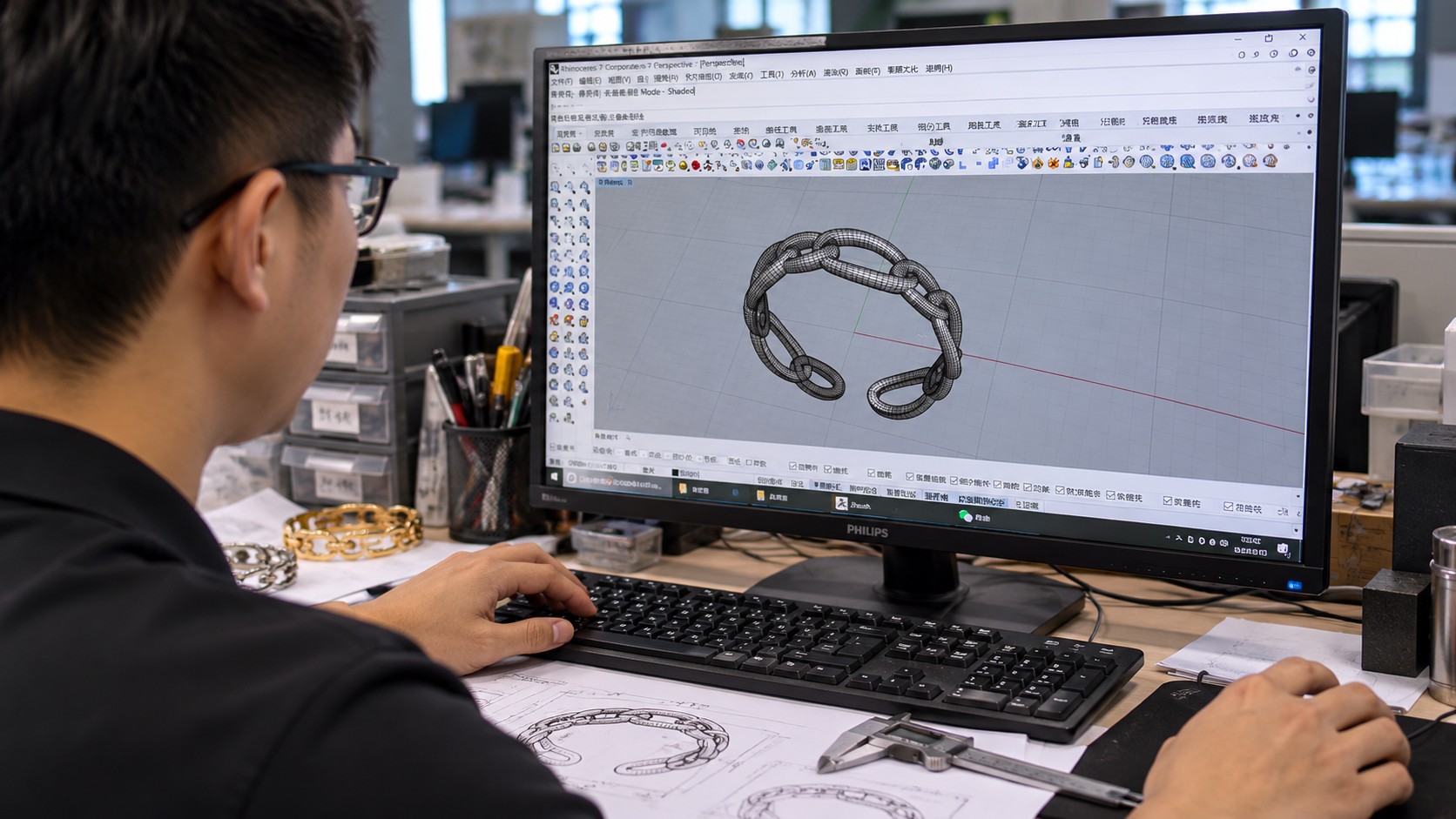
1. Jewelry Design and 3D CAD Modeling
Stainless steel jewelry manufacturing begins with design evaluation and technical development. Designs may originate from sketches, reference images, existing samples, or digital design files. Before production, manufacturers evaluate the design's dimensions, structural requirements, component connections, decorative details, and manufacturing feasibility. For original designs, 3D Computer-Aided Design (CAD) modeling converts concepts into digital models that can be reviewed and adjusted before physical production. Important design considerations include:
- •Metal thickness and product dimensions
- •Ring sizing and chain specifications
- •Earring posts, clasps, and connecting components
- •Stone settings and decorative structures
- •Polishing accessibility and surface finish requirements
- •Production tolerances and assembly feasibility
Early design evaluation helps identify features that may increase tooling complexity, material consumption, or production costs. For B2B buyers, this stage also provides an opportunity to adjust designs before investing in physical samples or production tooling.
2. Rapid Prototyping, Sampling and Golden Sample Approval
After the design is reviewed, manufacturers develop prototypes to evaluate its physical structure and appearance. Depending on the project, rapid prototyping may involve 3D printing, wax or resin models, CNC machining, or other suitable methods. A prototype helps evaluate shape, dimensions, proportions, and assembly feasibility. However, a prototype made from resin or wax cannot fully represent the properties of the final stainless steel product. A finished metal sample may therefore be required to evaluate actual weight, polishing quality, surface finish, component connections, and wearability.
How Long Does Stainless Steel Jewelry Sampling Take?
Sampling lead times depend on design complexity, available components, tooling requirements, and finishing specifications. At Touchlove Jewelry, sampling can take approximately 5–7 days for selected designs and projects. New molds, complex structures, specialized finishes, or additional testing may require more time.
Why Is Golden Sample Approval Important?
Before bulk production, buyers and manufacturers should agree on an approved reference sample, often called a Golden Sample. This reference helps establish expectations for product dimensions, construction, color, finishing, and overall appearance. It also provides a practical basis for evaluating production consistency during repeat orders.
3. Stainless Steel Material Selection: 316L and Component Specifications
Material selection affects corrosion resistance, mechanical properties, processing requirements, and product performance. 316L stainless steel is widely used for jewelry because of its corrosion resistance and suitability for various manufacturing and decorative finishing processes. The alloy contains chromium, nickel, and molybdenum. Molybdenum contributes to improved resistance to certain types of localized corrosion compared with some other stainless steel grades. 304 stainless steel is another commonly used grade, although its composition and corrosion resistance differ from those of 316L.
Does Every Component Need to Be 316L Stainless Steel?
Not necessarily. A finished jewelry product may contain a main body, chain, clasp, jump rings, extension chain, earring post, and decorative findings. These components may have different material specifications depending on their function and the agreed product requirements. For example, a necklace described as 316L stainless steel should not automatically be assumed to contain 316L in every clasp, connecting ring, or extension-chain component without verification. For wholesale sourcing, buyers should confirm:
- •Stainless steel grade of the main jewelry body
- •Material specifications of skin-contact components
- •Clasps, jump rings, chains, and other findings
- •Relevant material and regulatory testing requirements
Material grade alone does not establish compliance with every destination-market regulation. The applicable requirements must be assessed for the finished product and its components.
4. Component Production: Casting, CNC Machining and Stamping
Once the design and material specifications are confirmed, manufacturers select appropriate component production methods. Different techniques are used because jewelry designs vary significantly in geometry, detail, production volume, and tooling requirements.
Comparison of Stainless Steel Jewelry Manufacturing Methods
Manufacturing Method Suitable Jewelry Designs Tooling & Precision B2B Cost & Lead-Time Considerations Lost-Wax Investment Casting Sculptural rings, textured pendants, complex 3D components Requires suitable patterns and investment molds; reproduces complex details Mold preparation, casting, and finishing influence costs and production schedules CNC Machining Geometric rings, precision bands, defined openings and edges CAD/CAM-controlled machining; fixtures and tools may be needed Avoids some dedicated forming molds, but machining time and material removal affect unit costs Stamping & Laser Cutting Flat charms, sheet-metal earrings, geometric components Stamping requires suitable dies; laser cutting does not require dedicated stamping dies Can be efficient for repeatable production; setup and tooling economics depend on order volume Lost-Wax Investment Casting
Investment casting uses wax or suitable resin patterns to create refractory molds. After removing the patterns, molten stainless steel is introduced into the prepared mold cavities. After solidification, the metal components are separated, cleaned, and prepared for secondary processing. This method is suitable for selected jewelry designs with complex three-dimensional structures and detailed surfaces.
CNC Machining
CNC machining uses programmed cutting equipment to produce components with controlled dimensions and geometric features. It is useful for certain rings, rigid components, and designs requiring precise openings, edges, or dimensional relationships.
Stamping and Laser Cutting
Stamping uses mechanical pressure and dies to form suitable metal components. Laser cutting can produce selected shapes from metal sheet without a dedicated stamping die. The most economical method depends on the jewelry design, quantity, material thickness, precision requirements, and expected repeat-order volume. Manufacturers may combine multiple processes when a single method cannot achieve all required features.
5. Welding and Component Assembly
Many stainless steel jewelry products contain multiple metal components that must be assembled before final finishing. Common assembly activities include attaching earring posts, connecting pendant loops, joining decorative components, fitting clasps, and constructing multi-part jewelry designs.
Laser Welding in Jewelry Manufacturing
Laser welding is a precision joining method that uses concentrated energy to create localized metal joints. For suitable jewelry components, laser welding can reduce the heat-affected area compared with broader heating methods. It can be useful for small connections and components where weld placement must be controlled. However, laser welding is not necessary for every jewelry design. Mechanical connections, other welding methods, and alternative assembly techniques may also be appropriate. Regardless of the joining method, connection quality depends on proper alignment, joint design, welding parameters, and subsequent inspection. For buyers, important quality checkpoints include the security of pendant loops, earring posts, chain connections, clasps, and other stress-bearing components.
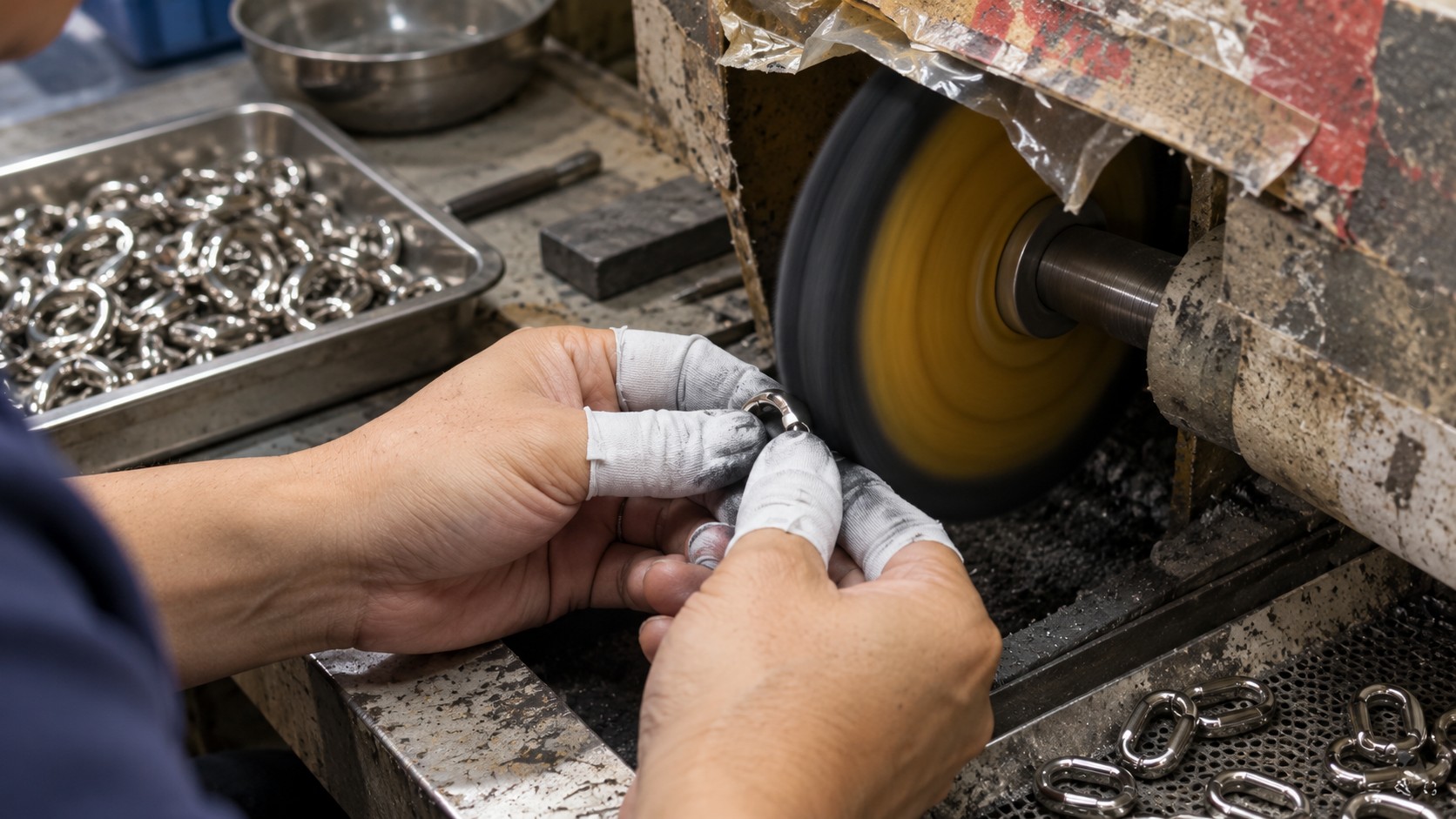
6. Polishing, Ultrasonic Cleaning and Surface Preparation
After metal forming and relevant assembly operations, jewelry components are prepared for their final surface appearance. Unfinished metal components may contain machining marks, burrs, casting residues, or uneven surface areas. Depending on the product, manufacturers may use grinding, deburring, mechanical polishing, buffing, and other finishing techniques. Common stainless steel jewelry surface finishes include mirror-polished, brushed, satin, matte, and textured appearances.
Why Is Surface Cleaning Important Before PVD?
Before decorative coating, polishing compounds, waxes, oils, and other residues must be removed from the surfaces to be coated. Suitable cleaning processes may include ultrasonic cleaning, degreasing, rinsing, and drying, depending on the product and coating requirements. Ultrasonic cleaning uses high-frequency sound waves in a liquid cleaning medium to assist in removing contamination from accessible surfaces. Proper cleaning supports coating adhesion and reduces the risk of visible surface defects. The appropriate cleaning procedure depends on the metal, component geometry, contamination type, and selected surface treatment.
7. PVD Coating and Decorative Surface Finishing
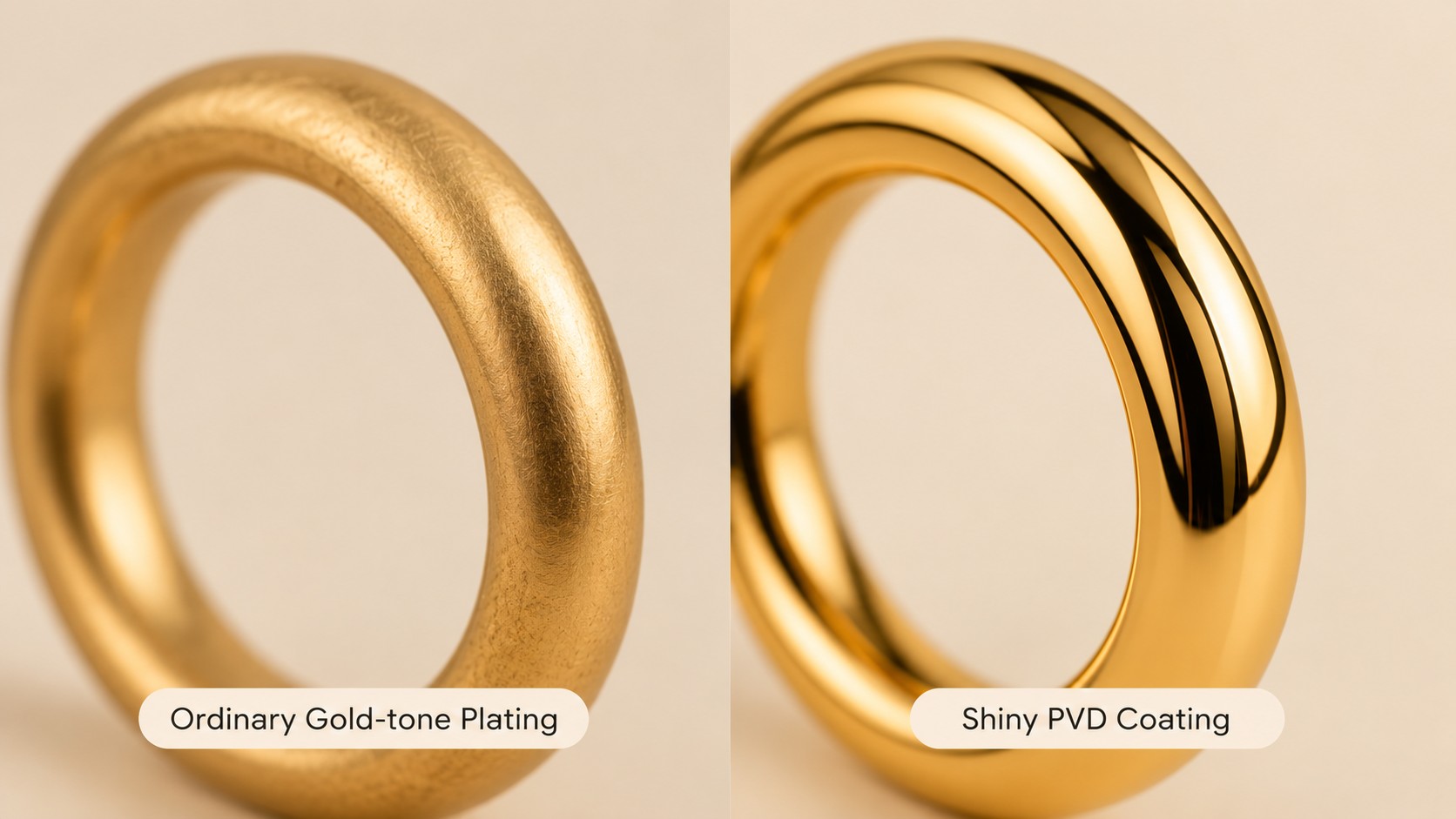
After polishing and cleaning, stainless steel jewelry may retain its natural silver-tone appearance or receive a decorative finish. Physical Vapor Deposition (PVD) is a vacuum-based coating technology used for selected gold-tone, rose gold-tone, black, and other decorative finishes. During PVD processing, coating materials are deposited onto prepared jewelry surfaces under controlled vacuum conditions.
What Materials Are Used in Gold-Tone PVD Coatings?
Different PVD systems can use different coating materials and layer structures. Titanium nitride (TiN), zirconium-based compounds, and gold-containing coatings may be used in suitable decorative coating systems, depending on the desired appearance and technical specifications. Terms such as 14K gold-tone or 18K gold-tone may describe a target color rather than the actual gold content of the coating. Therefore, buyers requesting genuine gold-containing coatings should confirm the deposited material, gold purity where applicable, coating structure, and agreed specifications.
What Affects PVD Coating Quality?
Important considerations include:
- •Surface polishing and cleanliness
- •Coating materials and process conditions
- •Component shape and coating accessibility
- •Color consistency across production batches
- •Coating adhesion and relevant performance requirements
PVD coating generally follows the existing surface texture rather than correcting underlying scratches or polishing defects. For wholesale projects, approved physical color samples and clearly defined finishing requirements help reduce differences between production batches. Depending on the project, specialized surface-finishing partners may participate in production, with finished components assessed against the agreed specifications.
8. Stone Setting, Decorative Resin and Final Assembly
Some stainless steel jewelry requires additional decorative processes after metal component production. These may include cubic zirconia setting, pearl assembly, natural stone installation, mother-of-pearl components, resin decoration, and adhesive bonding. The correct manufacturing sequence depends on the decorative material, fixing method, and surface-finishing requirements.
Mechanical Stone Setting
Cubic zirconia and other suitable stones may be secured using prong, bezel, channel, or other mechanical setting methods. For designs requiring PVD coating, the stone-setting sequence must consider the stone's properties, setting structure, coating accessibility, and processing conditions. Some suitable mechanical settings may be completed before coating when the process has been validated. Other designs require stone installation afterward.
Pearls, Resin and Adhesive-Bonded Components
Freshwater pearls, mother-of-pearl, resin decorations, and adhesive-bonded components may be sensitive to heat, vacuum processing conditions, or surface-treatment chemicals. For these products, manufacturers commonly complete the required metal finishing before installing sensitive decorative elements. This approach helps avoid unnecessary exposure of the decorative materials and adhesives to unsuitable processing conditions.
Decorative Resin and Cold Enamel
Decorative resin filling and cold-enamel-style finishes can be used to create colored details in jewelry. Unlike traditional kiln-fired vitreous enamel, these decorative systems generally involve polymer-based materials with their own application and curing requirements. For suitable designs, decorative resin application takes place after the required metal surface finishing. Manufacturers must consider resin placement, adhesion, curing conditions, and protection of the finished metal surface. For wholesale buyers, confirming the decorative assembly sequence is important when evaluating the risk of loose stones, adhesive failure, discoloration, or other product defects.
9. Quality Inspection, Compliance and Packaging
Quality inspection helps identify manufacturing defects and confirm that finished products meet approved specifications. Inspection requirements vary according to product design, manufacturing process, destination market, and buyer expectations.
Dimensional and Appearance Inspection
Manufacturers may use calipers and other suitable measuring tools to check ring dimensions, chain lengths, component thickness, and other agreed measurements. Visual inspection covers scratches, polishing defects, surface marks, uneven decorative details, and color differences.
Structural and Functional Inspection
Clasp operation, earring posts, welded joints, connecting rings, hinges, and stone settings can be checked for correct assembly and function. Depending on the product requirements, selected functional or retention checks may also be included.
Coating Inspection
For coated products, quality checks may cover coating appearance, color consistency, coverage, and adhesion. Additional coating-performance assessments, including suitable corrosion or wear-related tests, may be arranged according to agreed specifications and applicable test methods.
EU REACH and Jewelry Testing Requirements
For jewelry supplied to European markets, relevant restrictions under EU REACH Annex XVII include:
- •Entry 23 — Cadmium: restrictions applicable to specified jewelry metal components.
- •Entry 27 — Nickel: nickel release restrictions for relevant skin-contact jewelry and piercing post assemblies.
- •Entry 63 — Lead: restrictions applicable to specified jewelry articles and components.
Nickel release assessment may involve EN 1811:2023. For applicable coated products, EN 12472:2020 provides a method for simulating accelerated wear and corrosion before nickel release testing. These standards and restrictions apply according to the relevant product type and regulatory conditions. Material testing, laboratory reports, and additional compliance documentation should be evaluated against the actual product specifications and intended destination market.
Packaging and Order Verification
After final inspection, finished jewelry is prepared for packaging and shipment. Packaging requirements may include individual protective bags, jewelry cards, product labels, branded packaging, and shipping cartons. SKU identification, order quantities, color variants, and packing specifications should be checked against the approved order requirements.
10. How Manufacturing Processes Differ by Jewelry Type
Not every stainless steel jewelry product follows the same manufacturing route. The production sequence depends on the product's geometry, components, decorative elements, and surface-finishing requirements.
Jewelry Type Common Manufacturing Route Key Quality Considerations Minimalist Rings Machining or suitable metal forming → Polishing → Optional coating Ring dimensions, edge finishing, surface consistency Decorative Pendants Casting or other component forming → Finishing → Assembly Detail reproduction, connector strength, surface quality CZ Earrings Component production → Welding / assembly → Finishing → Stone setting at the appropriate stage Earring post alignment, stone retention, color consistency Pearl or Resin Jewelry Metal component production → Polishing → Optional coating → Sensitive decorative assembly Adhesive performance, component security, decorative appearance Chain Necklaces and Bracelets Chain and component preparation → Connection and assembly → Appropriate finishing Chain integrity, clasp functionality, length accuracy These examples are general manufacturing routes rather than fixed procedures for every design. For B2B sourcing, differences in manufacturing routes help explain variations in tooling costs, minimum order quantities, production schedules, and quality-control requirements.
11. Stainless Steel Jewelry Manufacturing at Touchlove Jewelry
Touchlove Jewelry is the export brand of Guangzhou Likeme Jewelry Company Ltd, a China-based stainless steel jewelry supplier serving international jewelry brands, wholesalers, and retailers. Established in 2014, the company has over 12 years of experience in the jewelry industry. Its business operations and showroom are located in Guangzhou, while its 2,000 m² stainless steel jewelry production factory is located in Dongguan, Guangdong, China. The Dongguan facility has a stated monthly production capacity of up to 1,000,000 pieces, depending on product mix and production requirements. Its manufacturing operations support jewelry design evaluation, 3D CAD modeling, rapid prototyping, component production, assembly, polishing, quality inspection, and coordination of applicable finishing processes. Touchlove Jewelry supplies wholesale stainless steel jewelry across five main product categories:
- •Stainless Steel Rings
- •Stainless Steel Necklaces
- •Stainless Steel Earrings
- •Stainless Steel Bracelets
- •Stainless Steel Bangles
The company supports OEM, ODM, and private label projects involving product designs, dimensions, decorative elements, finishes, logos, and packaging. MOQ starts from 50 pieces for selected jewelry styles, while new custom designs are evaluated according to tooling requirements, production complexity, and order specifications. Sampling is available in approximately 5–7 days for selected projects, with timelines confirmed according to the design and finishing requirements. For jewelry brands developing new collections and wholesalers planning repeat orders, these manufacturing and sourcing capabilities provide a basis for discussing product feasibility, sampling, production quantities, and quality requirements.
Frequently Asked Questions
How is stainless steel jewelry made?
Stainless steel jewelry is produced through design development, material selection, component manufacturing, assembly, polishing, optional surface coating, decorative installation, and quality inspection. The specific processes depend on the jewelry design and construction.
Is stainless steel jewelry always made by casting?
No. Depending on the product, manufacturers may use investment casting, CNC machining, stamping, laser cutting, or combinations of different production processes.
How long does stainless steel jewelry sampling take?
Sampling time varies according to design complexity, tooling, component availability, and finishing requirements. Touchlove Jewelry offers approximately 5–7 day sampling for selected projects, while complex custom designs may require longer.
Does 18K PVD stainless steel jewelry contain real gold?
Not necessarily. The term may refer to an 18K-style gold color rather than a verified gold-alloy coating. Buyers should confirm the actual coating composition and specifications if gold content is required.
Are stones installed before or after PVD coating?
The installation sequence depends on the stone, setting method, and coating process. Heat-sensitive or adhesive-bonded components are commonly installed after metal surface finishing, while some suitable mechanical settings may be completed earlier when compatible with the process.
What affects the MOQ and cost of custom stainless steel jewelry?
Key factors include design complexity, tooling, manufacturing method, order quantity, material requirements, decorative elements, surface finish, and packaging specifications.
What should wholesale buyers check before bulk production?
Buyers should confirm material grades, approved samples, product dimensions, component specifications, finish requirements, relevant testing documentation, packaging, MOQ, and production schedules.
Conclusion
Stainless steel jewelry manufacturing involves a combination of engineering decisions, metalworking processes, surface finishing, decorative assembly, and quality control. From 3D CAD development and prototype approval to component production, polishing, coating, and final inspection, each manufacturing stage influences the finished product and its production requirements. For jewelry brands, wholesalers, and retailers, understanding these processes provides a practical foundation for evaluating suppliers, comparing quotations, planning new collections, and managing repeat orders. Touchlove Jewelry supports international buyers with wholesale stainless steel jewelry, OEM and ODM development, and private label sourcing. To discuss product designs, sampling requirements, or bulk orders, contact Touchlove Jewelry for project-specific manufacturing and quotation information.
Looking for a Stainless Steel Jewelry Supplier?
Contact Touchlove Jewelry for wholesale stainless steel jewelry, OEM/ODM development, and private-label inquiries.
Email: info@touchlove-jewelry.com
WhatsApp: +86 15918528597

About Touchlove Jewelry
Guangzhou Likeme Jewelry Company Ltd, the manufacturer behind Touchlove Jewelry, has specialized in stainless steel jewelry since 2014. With an office and showroom in Guangzhou and a production facility in Dongguan, China, we provide OEM/ODM manufacturing and wholesale jewelry solutions for brands, wholesalers, distributors, and retailers worldwide, with a monthly production capacity of up to 1,000,000 pieces.
Learn More About Touchlove Jewelry →-

Showroom Address: Unit 1607 RCC Huwanli, No. 11-13 Tianxin 2nd street, Baiyun District, Guangzhou
Factory Address: 4th Floor, Hongye Zhong Road, No 4th, Changan town, Dongguan, China
Phone: +86 15918528597
Email: info@touchlove-jewelry.com
- Company Info
- About Us
- OEM & ODM
- Contact Us
- Jewelry Test Reports
- Downloads
- FAQ
- Blog
- Payment & Shipping
- Customs & Taxes
- Locations We Ship To
- Shipping Policy
- Payment Methods
Copyright © Guangzhou Likeme Jewelry Company Ltd. All Rights Reserved.

- NEW
