-
Home
- NEW
- CZ Jewelry Collection
- Pearl Jewelry
- Minimalist Jewelry
- Natural Stone Jewelry
- Resin & Acrylic Jewelry
- Earrings
- Ring
- Necklace
How to Verify a Stainless Steel Jewelry Supplier Before Placing a Bulk Order
Oct 26, 2026Choosing a reliable stainless steel jewelry supplier is an important step for jewelry brands, wholesalers, distributors, and retailers preparing to place bulk orders. Product images and competitive quotations alone cannot establish a supplier's manufacturing capabilities, material quality, or production consistency.
Before committing to a large order, buyers should verify the supplier's business identity, production capabilities, material specifications, sample quality, quality control procedures, and commercial terms. This guide explains how to evaluate a stainless steel jewelry supplier, what documentation to request, and which warning signs to identify before placing a wholesale or OEM order.
1. Verify the Supplier's Business Identity and Production Location
The first step is to establish who you are purchasing from and where the company's business and production activities take place. A jewelry supplier may operate a showroom, sales office, warehouse, or production facility at different locations. Buyers should understand these roles rather than assuming that every supplier advertising factory-direct prices owns all its production facilities.
What Buyers Should Check
- Registered business identity: Verify the legal company name, business contact details, and relevant registration information.
- Office and showroom: Confirm the supplier has an identifiable business presence and a clear communication process.
- Production location: Ask where jewelry is manufactured and which production processes are handled internally or by external partners.
- Industry experience: Review the supplier's product specialization, operating history, and experience serving international B2B customers.
- Business documentation: Confirm that quotations, purchase orders, invoices, and other relevant documents identify the appropriate contracting entity.
China's established jewelry manufacturing centers, including Guangzhou and Dongguan, provide access to jewelry production, component suppliers, finishing services, and related manufacturing resources. However, location alone does not prove a supplier's capabilities.
Supplier Example: Touchlove Jewelry operates its business and showroom activities in Guangzhou, China, with a production facility in Dongguan, Guangdong. Buyers evaluating the company should consider the respective roles of its business operations and production facility when discussing sourcing requirements.
2. Evaluate Manufacturing Capabilities and OEM/ODM Support
A reliable stainless steel jewelry supplier should be able to explain how products are developed, manufactured, inspected, and prepared for delivery. The evaluation should cover both existing designs and the ability to support custom projects.
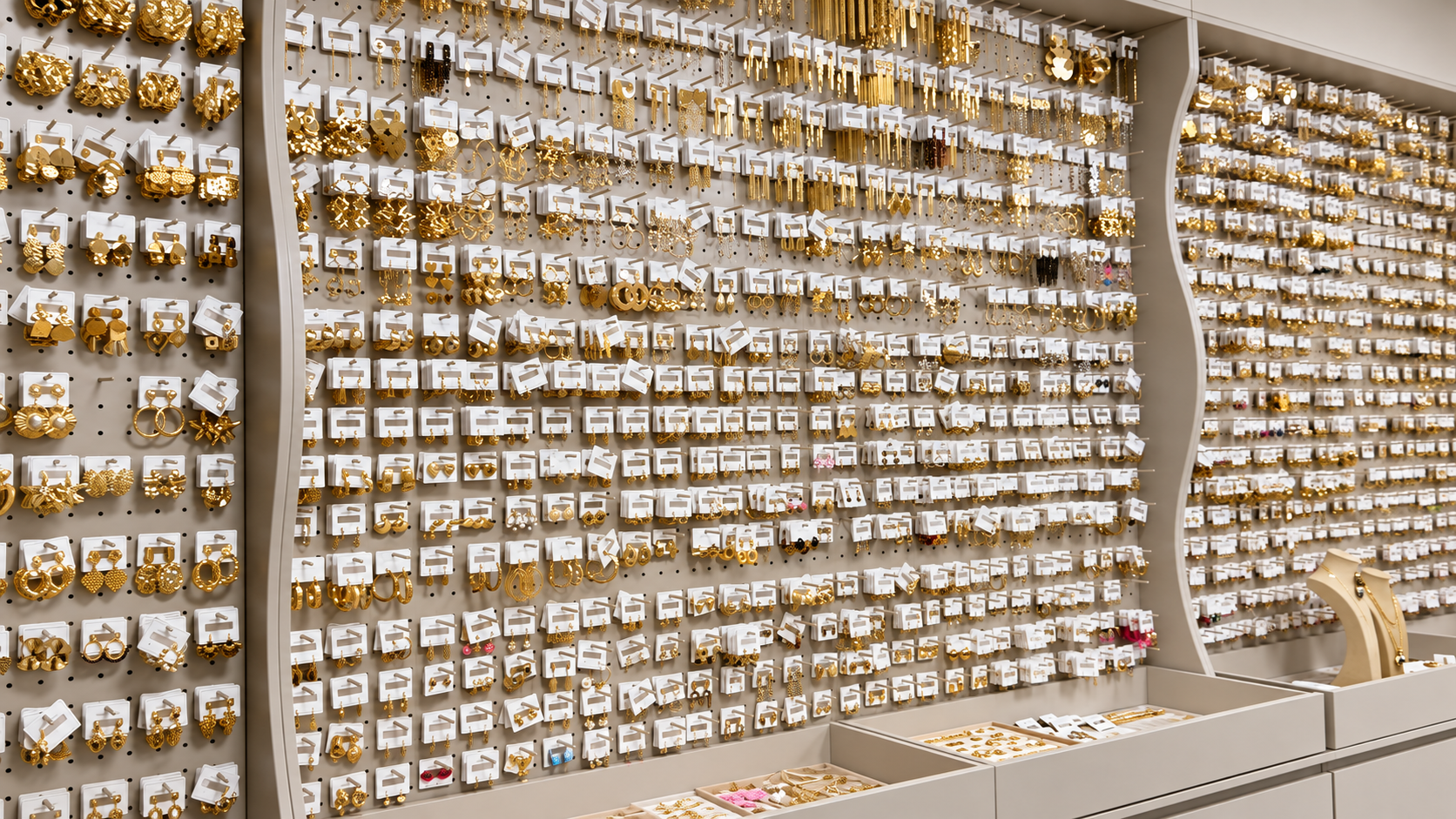
Manufacturing Capabilities to Verify
- Product range: Rings, necklaces, pendants, earrings, bracelets, bangles, and jewelry sets.
- Production processes: Relevant operations such as stamping, casting, CNC machining, polishing, assembly, and surface finishing.
- Product development: The ability to work from reference images, technical drawings, or 3D CAD files.
- Customization: Available options for dimensions, metal finishes, logos, components, and packaging.
- Production planning: Realistic sampling and bulk-production schedules based on the order quantity and project requirements.
- Quality management: Procedures for inspecting samples, monitoring production, and checking finished products.
For OEM projects, buyers may require a supplier to develop a new design from drawings or reference images. ODM projects may involve adapting an existing design to meet a brand's requirements. Ask for relevant product examples, sample-development procedures, and details of the approval process before mass production begins.
Explore Touchlove Jewelry's OEM and ODM Capabilities to discuss product references, design requirements, material specifications, quantities, and branding needs with the team.
3. Confirm Stainless Steel Grades, PVD Finishes, and Specifications
Descriptions such as "stainless steel," "gold plated," or "hypoallergenic" are not substitutes for specific product requirements. Buyers should confirm the material grade, surface finish, construction, dimensions, and any applicable testing requirements before approving a purchase.
Stainless Steel Jewelry Material Checklist
- Material grade: Confirm whether the product is specified as 304 or 316L stainless steel. These grades have different compositions and corrosion-resistance characteristics.
- PVD and other surface finishes: Confirm the requested finish, such as gold-tone, rose gold-tone, black, or natural steel-tone. Approve a physical color sample when consistent appearance is important. (Note: A gold-tone finish describes color and appearance; it does not establish that a product contains solid gold.)
- Product dimensions and construction: Check length, width, thickness, weight where relevant, closure mechanisms, earring posts and backings, hinges, clasps, stone settings, and decorative components.
- Material documentation: Request material specifications or supporting documentation where appropriate. If testing is required, confirm which product or sample was tested and what the report covers.
For more technical information, read the guides to 316L Stainless Steel Jewelry and PVD Gold Plating for Stainless Steel Jewelry.
4. Evaluate Samples Before Approving Bulk Production
A representative sample allows buyers to evaluate a product before committing to a larger quantity. However, sample approval is useful only when the approved sample and subsequent production are evaluated against clearly defined specifications.
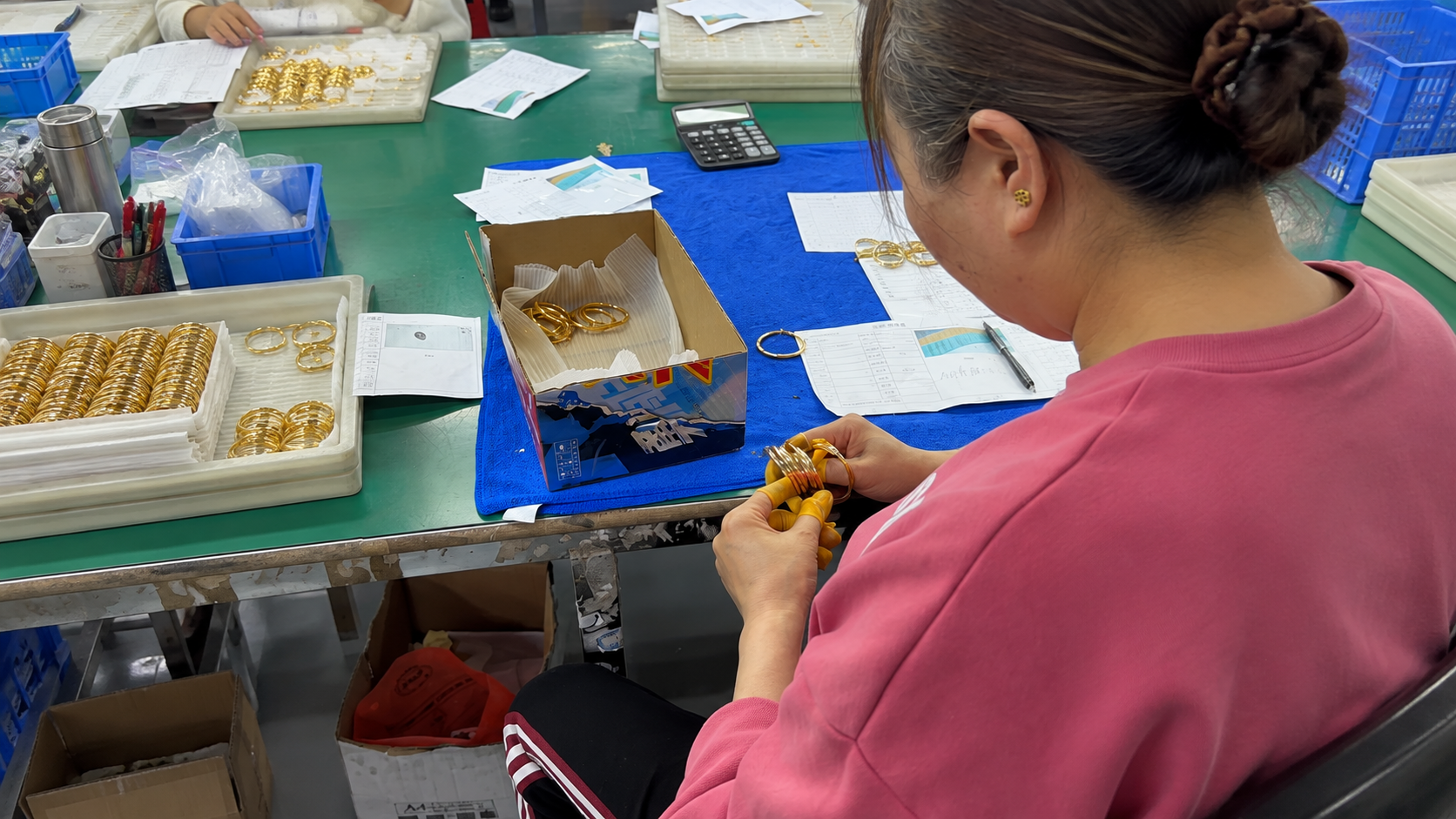
What to Inspect in a Jewelry Sample
- Appearance: Check shape, symmetry, surface condition, scratches, and visible manufacturing defects.
- Dimensions: Verify length, width, thickness, and any agreed tolerances.
- Material and finish: Compare the material specifications, color, surface appearance, and finishing quality with the approved requirements.
- Components: Inspect earring posts, backings, clasps, hinges, and other functional parts.
- Assembly: Check joint strength, closure function, component alignment, and the security of assembled parts.
- Decorative details: Examine stone positioning, setting security, and the consistency of decorative elements.
- Packaging: Confirm jewelry cards, individual bags, boxes, labels, and branding requirements.
The inspection criteria should reflect the actual product. For example, CZ-set earrings require attention to stone positioning and setting security. Pearl earrings require inspection of the visible pearl surface, attachment point, alignment, and decorative consistency.
Create a Written Sample Approval Record
Before bulk production begins, document the approved sample reference, product specifications, finish, dimensions, components, packaging, and agreed tolerances. Retain photographs and an approved physical sample as references for subsequent inspections.
Need support with sample development? Explore Touchlove Jewelry's OEM and ODM services to discuss your product requirements before bulk production.
5. Review Quality Control Procedures and Compliance Documentation
Quality control should be an identifiable process rather than a general promise. Buyers should understand how defects are identified, how inspection results are recorded, and how nonconforming products are handled.
Questions to Ask About Quality Control
- Are incoming materials and components checked where applicable?
- Are products inspected during relevant production stages?
- Is a final inspection conducted before shipment?
- Are inspection criteria based on the approved sample and written specifications?
- Can the supplier provide inspection records or photographs when agreed?
Understand Applicable Jewelry Testing Standards
For jewelry sold in European markets, buyers may need to evaluate compliance with relevant chemical restrictions, including applicable requirements under REACH Annex XVII. For nickel release, the relevant standards include:
- EN 1811:2023: A reference test method for nickel release from applicable post assemblies inserted into pierced body parts and articles intended for direct and prolonged skin contact.
- EN 12472:2020: A method for simulating accelerated wear and corrosion to detect nickel release from coated items.
The applicability of each method depends on the product and the relevant requirements. For lead, cadmium, nickel release, or other chemical requirements, request relevant documentation and check the product description, tested sample identification, report number, test method, and reported results.
Test reports apply only to the samples and test scope identified in the respective reports. They should not be interpreted as blanket certification of all products supplied by a manufacturer.
6. Compare MOQ, Pricing, Lead Time, and Order Terms
A competitive unit price does not necessarily represent the lowest overall sourcing cost. Buyers should compare quotations using equivalent product specifications and clearly defined commercial terms.
Information to Confirm Before Comparing Quotations
- Product design: Reference number, drawings, or approved images.
- Material & Finish: Stainless steel grade, color, coating process, and surface appearance.
- Dimensions & Components: Length, width, thickness, posts, hinges, clasps, and decorative elements.
- Order quantity and MOQ: Quantity per design and the minimum order quantity per style or finish.
- Tooling and development: Mold, tooling, or development charges where applicable.
- Lead time: Estimated sampling, production, inspection, and dispatch schedule.
- Shipping & Packaging: Destination, shipping method, applicable shipping terms, and packaging requirements.
Understand the complete cost structure. Ask whether the quotation includes product manufacturing, tooling, customization, packaging, and other project-specific expenses.
7. Confirm Private-Label Packaging and Branding Requirements
For jewelry brands and private-label businesses, the finished product is only one part of the order. Packaging, labeling, and presentation can also affect retail readiness. Before production, confirm the requirements for:
- Jewelry cards and printed brand information.
- Individual bags, pouches, boxes, and gift packaging.
- Logo placement, printing methods, and artwork approval.
- Product labels, barcodes, and other required information.
- Carton packing and shipping protection.
Request artwork proofs or packaging samples when necessary. Clear packaging specifications help reduce misunderstandings when the order is prepared for retail distribution.
8. Identify Warning Signs Before Placing an Order
Certain warning signs deserve additional investigation before a buyer makes a financial commitment:
- Unclear business identity: The supplier cannot provide consistent company information or explain the relationship between the contracting entity and production location.
- Unverifiable claims: The supplier describes extensive capabilities but cannot provide relevant examples or evidence.
- Vague material descriptions: The quotation identifies only "stainless steel" or "gold plated" without confirming specifications.
- Pressure to skip sampling: The supplier discourages sample approval or refuses to document important product requirements.
- Unclear testing claims: The supplier presents a report without identifying the tested sample or scope of applicability.
- Unwillingness to document agreements: The supplier avoids written confirmation of specifications, approved samples, or commercial terms.
9. Pre-Order Verification Checklist for Jewelry Buyers
Before confirming a bulk purchase, use the following checklist to organize the verification process:
- Verify the supplier's business identity and contact details.
- Confirm the production location and manufacturing arrangements.
- Review examples of relevant products and customization projects.
- Confirm material grades, surface finishes, dimensions, and components.
- Evaluate and approve a representative product sample.
- Document product specifications and acceptance criteria.
- Review applicable testing and compliance documentation.
- Confirm MOQ, unit pricing, tooling, and packaging costs.
- Agree on sampling, production, inspection, and dispatch schedules.
- Confirm payment terms, shipping arrangements, and procedures for resolving quality issues.
Frequently Asked Questions
How can I verify whether a stainless steel jewelry supplier is reliable?
Review the supplier's business identity, production arrangements, relevant product experience, material specifications, sample quality, quality control procedures, and written commercial terms. Request supporting documentation where appropriate, and approve a representative sample before confirming a bulk order.
What documents should I request before placing a bulk jewelry order?
Depending on the product and destination market, request a detailed quotation, written product specifications, approved sample records, packaging specifications, and relevant material or test documentation. If a test report is provided, check the report number, tested sample, test method, results, and scope before relying on it.
Should I approve a sample before mass production?
Yes. A representative sample helps confirm the design, dimensions, material finish, components, and workmanship before production begins. Record the approved sample reference and agreed specifications so that bulk goods can be checked against the same requirements.
How should I compare quotations from different jewelry suppliers?
Compare quotations using equivalent material grades, product dimensions, finishes, components, order quantities, tooling charges, packaging, lead times, and shipping terms. A lower unit price may not represent a lower total cost if important specifications or services are excluded.
Looking for a Stainless Steel Earring Supplier?
Contact Touchlove Jewelry for wholesale stainless steel earrings, OEM/ODM development, and private-label inquiries.
Email: info@touchlove-jewelry.com
WhatsApp: +86 15918528597

About Touchlove Jewelry
Guangzhou Likeme Jewelry Company Ltd, the manufacturer behind Touchlove Jewelry, has specialized in stainless steel jewelry since 2014. With an office and showroom in Guangzhou and a production facility in Dongguan, China, we provide OEM/ODM manufacturing and wholesale jewelry solutions for brands, wholesalers, distributors, and retailers worldwide, with a monthly production capacity of up to 1,000,000 pieces.
Learn More About Touchlove Jewelry →-

Showroom Address: Unit 1607 RCC Huwanli, No. 11-13 Tianxin 2nd street, Baiyun District, Guangzhou
Factory Address: 4th Floor, Hongye Zhong Road, No 4th, Changan town, Dongguan, China
Phone: +86 15918528597
Email: info@touchlove-jewelry.com
- Company Info
- About Us
- OEM & ODM
- Contact Us
- Jewelry Test Reports
- Downloads
- FAQ
- Blog
- Payment & Shipping
- Customs & Taxes
- Locations We Ship To
- Shipping Policy
- Payment Methods
Copyright © Guangzhou Likeme Jewelry Company Ltd. All Rights Reserved.

- NEW
